5 Things a 14,782 Hour Solo Player Does Differently in Official Rust
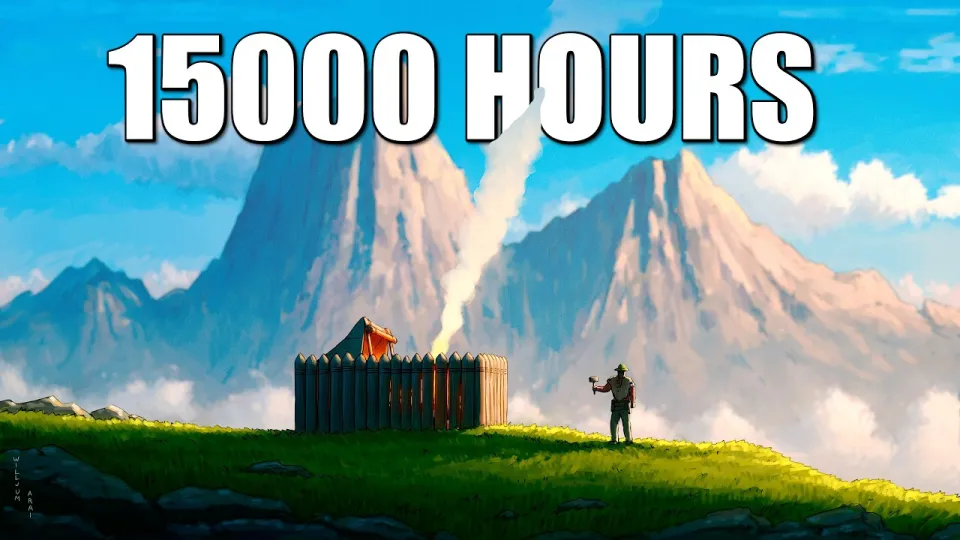
Video: How a solo with 14,782 Hours plays official rust...
You can order the same kind of articles for your own video to boost it on YouTube and Google. Just message the Telegram bot @sat_sit_bot. It writes articles around your video, embeds the video and publishes them on popular niche websites (no ads). Try it free: 50 articles on us.
· based on the channel Willjum
Key takeaways
- Willjum's solo account shows 14,782 hours played, roughly 1,180 hours per year over 12.5 years of Rust.
- The run is on official Rust servers, where there are no boosted rates, no team cap and no wipe-day protection.
- The base in the video was designed by builder Luca.Builds and includes a mannequin decoy placed in a window.
- The video was published on 2026-06-07 and runs over an hour as a single solo wipe story.
- Manscaped's Beard Hedger Plus offer with code WILLJUM15 is the video's sponsor placement.
Rust rewards preparation more than raw aim, and a solo with 14,782 hours shows it: the veteran spends the first hour of a wipe on base placement and monument proximity instead of farming, keeps scrap for blueprints rather than weapons, and treats every footstep as information. That routine, not mechanical skill, is what keeps a lone player alive on official servers where groups of four to eight are the norm. The video's sponsor link, the Manscaped Beard Hedger Plus offer, sits alongside the run itself.
What 14,782 hours of Rust actually means
Fourteen thousand seven hundred eighty-two hours is roughly 1,180 hours per year across 12.5 years, or closer to 1,850 hours per year if the account only started at full release — more than most part-time jobs. In practice that volume produces pattern recognition rather than faster reflexes: knowing which monuments get contested on wipe day, which sulfur nodes sit near a spawn beach, and when a group's roam rotates back to base. A solo cannot out-farm a clan, so the hours go into avoiding fights that cannot be won and taking only the ones that pay.
Base placement and the decoy window
The base in this run was built from a design by the builder Luca.Builds, and its most useful feature costs nothing: a mannequin placed in a window. Raiders and roamers shoot at silhouettes, so a static figure in a window absorbs arrows and bullets while the defender holds an angle from another opening. Beyond the decoy, the solo logic is simple — a compact footprint with an airlock, stone before sheet metal, and a location within a short run of a monument for cards and crates. Small bases are cheaper to upgrade and less attractive to raid groups scanning for loot rooms.
Scrap discipline: blueprints before weapons
A recurring joke around this style of play is the player who says he does not spend scrap on weapons and then crafts his twenty-eighth nail gun of the wipe. The underlying rule is real: on vanilla official servers, scrap is the bottleneck, and every workbench tier, blueprint and research table entry competes for the same resource. Priorities that hold up:
- Tier 1 and Tier 2 workbench before any weapon blueprint.
- A small furnace base and metal tools early, so farming compounds.
- Medical supplies and bandages researched before armor.
- Guns only once the base can survive a raid attempt.
A solo who skips step one and buys a semi-automatic rifle blueprint first usually loses the gun within an hour to a group with better backup.
Noise, bears and the limits of awareness
Experienced players claim they can hear a footstep from fifty yards, yet the same players walk into a bear standing directly behind them — a running theme in the community around this video. Sound in Rust is directional but layered: wind, rain, gunfire at a nearby monument and the hum of your own furnaces all mask footsteps. Practical habits include muting music during roams, checking behind before mining, and never assuming a quiet forest is empty. Bears and wolves kill more under-geared solos on wipe day than players do.
PvP decisions a solo should actually take
Jumping two crossbow players as a solo is not a beginner move, whatever the commentary suggests. The veteran's edge is choosing fights with an exit: engaging one player at a time, using cover that blocks a second angle, and disengaging the moment a third party appears. Numbers matter more than gear — a nail gun and a bow can beat a rifle if the rifle's owner is alone and out of position. The same logic applies to countering raids: wait for the group to commit explosives, then hit from the side they are not watching.
Why viewers watch and rarely play
Rust has an unusual audience split: a large share of viewers never install the game but watch hour-long wipe stories regularly. The appeal is the variety — base building, farming, politics, betrayal and PvP all fit in one session — and the pacing of an edited solo run, which compresses downtime. For anyone tempted to return, the reality check is harsh: a fresh vanilla server with a thousand players on wipe day can end a session in minutes when a naked with a bone knife wins the last fight. Watching first is a reasonable way to learn the map flow before spending the hours.
Links from the video
- https://manscaped.com/willjum
- https://www.patreon.com/Willjum
- https://www.twitch.tv/willjum
- https://twitter.com/willjum1
- http://creativecommons.org/licenses/by/4.0/
Final thoughts on the 14,782-hour solo run
The takeaway is that official Rust is survivable alone if the player treats time, scrap and information as the real resources. Base placement, blueprint order and fight selection matter more than aim, and the decoy window is a reminder that cheap tricks still work against experienced raiders. Willjum's breakdown of this solo wipe is worth watching for the pacing alone, and the sponsor offer is available at the Manscaped page for the Beard Hedger Plus if you want to support the channel.
Source: How a solo with 14,782 Hours plays official rust... · Markdown version
Questions & answers
Is 14,782 hours in Rust even possible?
Yes, though it requires years of consistent play. Spread over 12.5 years it is about 1,180 hours per year; if the account began at full release it is closer to 1,850 hours per year, which is nearly a full-time job. Leaving the game running while logged in also inflates the counter for many players.
Can a solo player survive on official Rust servers?
Yes, but the strategy differs from group play. A solo should prioritize a compact, cheap base near a monument, research blueprints and tools before guns, and avoid fights that cannot be exited quickly. Official servers have no team cap, so discretion matters more than gear.
What is the mannequin in the window for?
It is a decoy. Raiders and roamers tend to shoot at silhouettes in openings, so a mannequin absorbs arrows and bullets while the defender holds an angle from a different window. It costs almost nothing and buys seconds in a raid.
Why do people watch Rust videos without playing the game?
The game produces varied, self-contained stories — base building, farming, politics, betrayal and PvP in a single wipe — that read well as edited hour-long videos. Many viewers enjoy the tension and progression without enduring the harsh early-wipe experience themselves.